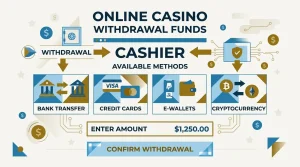
Betmica crypto withdrawal assets and currencies
 Available in US

Section element
Brand reference
Betmica includes USDT, USDC, ETH, SOL, TRX, BTC, BCH, DOGE and LTC among its cryptoassets. It also lists six fiat currencies and offers crypto deposit and withdrawal routes.
A cryptocurrency ticker identifies an asset, not its transfer network or receiving address. Bank transfers require different details.

Assets
Betmica supports nine named cryptoassets
The nine listed assets are USDT, USDC, ETH, SOL, TRX, BTC, BCH, DOGE and LTC. These are used for account transactions, rather than for the casino games themselves. Crypto appears under both deposit and withdrawal methods, and each ticker identifies a distinct asset.
Unlike a GBP bank transfer, a blockchain payment uses a wallet address on a particular network. The asset and network must match the receiving destination.
| Code | Asset |
|---|---|
| USDT | Tether token |
| USDC | USD Coin |
| ETH | Ether |
| SOL | Solana |
| TRX | TRON |
| BTC | Bitcoin |
| BCH | Bitcoin Cash |
| DOGE | Dogecoin |
| LTC | Litecoin |
The list includes stablecoins and other cryptocurrencies. Support for a ticker does not imply support for every network carrying that asset or for transfers to another coin’s address.
Stablecoins
USDT and USDC sit beside other cryptoassets
The stablecoin part of Betmica’s range includes USDT and USDC. A stablecoin is a digital token designed to track a reference value, usually a conventional currency. That design objective does not make it identical to money held in a bank account. It remains a digital asset transferred through token-compatible infrastructure.
The difference between the two ticker symbols matters even if both tokens aim for a similar reference value. A wallet that is prepared to receive one token may need a separate compatible network or asset selection to receive the other. Betmica supports both assets; the applicable transfer route must still match the selected token.
Although a stablecoin may track a fiat value, it is transferred as a token. Using an incompatible network or an incorrect address can result in irrecoverable loss.
Betmica’s withdrawal limits do not guarantee a particular exchange rate for stablecoin payouts.
Network coins
BTC, ETH, SOL and TRX belong to the crypto set
BTC, ETH, SOL and TRX are four further assets in Betmica’s crypto range. They represent units linked to different blockchain ecosystems. Bitcoin uses BTC; Ether is denoted ETH; SOL relates to Solana; and TRX is associated with TRON. None of these codes specifies a wallet address or a universally compatible network.
For a crypto transfer, an address identifies the receiving location and the network determines the system through which the token moves. These two pieces of routing information must be compatible. In particular, a familiar asset ticker should never be taken as proof that the cashier supports every chain on which a token might appear.
- Bitcoin: BTC is the asset code used for Bitcoin.
- Ethereum: ETH is the conventional ticker for Ether.
- Solana: SOL identifies the native asset of the Solana ecosystem.
- TRON: TRX is the code used for its native unit.
For any deposit or withdrawal, use the exact asset and network instructions shown for that transaction. The list of supported currencies is not a substitute for a receiving address.
Other tokens
BCH, DOGE and LTC complete the asset list
Betmica’s crypto selection also includes BCH, DOGE and LTC. BCH is the Bitcoin Cash asset, DOGE identifies Dogecoin and LTC identifies Litecoin. These are separate balances and cannot be merged into a BTC deposit simply because some originated from related technical histories.
These coins are not interchangeable with BTC or with one another. Listing an asset as a payment option does not imply that Betmica offers conversions or a cryptocurrency trading service.
Digital-asset payments can involve a network fee outside the casino’s control, as part of how blockchain transfers are validated. This is a general characteristic of some networks, not a claim about Betmica’s own charges. The asset type and receiving route are the operative facts.
Although the cashier groups these assets under Crypto, BCH, DOGE and LTC each require the appropriate transfer details.
Fiat currencies
Betmica also works with six fiat currencies
Betmica’s conventional currency range is EUR, CHF, CAD, NZD, AUD and GBP. Fiat currencies denominate balances and conventional payments; they do not require a cryptocurrency wallet address.
The abbreviations cover euros, Swiss francs, Canadian dollars, New Zealand dollars, Australian dollars and pounds sterling. The cashier examples use GBP, while Betmica’s promotional headlines quote amounts in EUR. A promotional amount in euros should not be silently treated as an identical amount in pounds.
| Code | Unit |
|---|---|
| EUR | Euro |
| CHF | Swiss franc |
| CAD | Canadian dollar |
| NZD | New Zealand dollar |
| AUD | Australian dollar |
| GBP | Pound sterling |
Cryptoasset codes describe digital units, whereas these six codes identify fiat currencies. Listing both types does not mean the cashier converts between them automatically. Payment limits and transfer eligibility remain governed by the specific transaction and its selected denomination.
Cashier mechanics
Crypto deposits and payouts need distinct checks
Betmica supports Crypto as both a deposit category and a withdrawal category. Deposits and withdrawals may use the same asset but require different instructions. A receiving address is relevant to a payout; a designated deposit destination is relevant when funds are sent into the casino account.
- Asset: identify the exact cryptocurrency, such as USDT or BTC, rather than only the broad Crypto category.
- Route: the compatible network must match the payment destination provided for that transaction.
- Amount: cash-out requests remain subject to Betmica’s withdrawal threshold and period limits.
- Review: account identity checks can form part of a withdrawal before money is released.
- Record: a blockchain transaction identifier is different from a bank payment reference.
A deposit and a payout also have distinct risks of error. Sending assets to a wrong address can be difficult or impossible to reverse, while a bank transfer may use a different correction or recall process. These are differences between payment systems, not evidence of a special Betmica network feature.
The banking methods distinguish crypto from card and bank payments. A balance denominated in GBP or EUR does not automatically indicate which token, if any, is used to transfer it.
Questions
Questions about Betmica cryptocurrency payments
The asset ticker is only one part of a crypto transaction. Network compatibility, account denomination and withdrawal rules also matter.
Which stablecoins does Betmica support?
Betmica supports USDT and USDC among its nine named cryptoassets. Both are commonly used as dollar-referenced digital tokens, but their different symbols identify distinct assets. A stablecoin balance is not the same as a bank deposit denominated in dollars. The token and transfer network need to match the receiving destination for a crypto payment.
Can Betmica payments use BTC and ETH?
BTC and ETH appear in Betmica’s cryptoasset list, alongside other coins and tokens. Crypto is included in both its general deposit categories and withdrawal categories. A withdrawal instruction needs an exact receiving address and compatible network; the presence of an asset code does not establish every possible blockchain network as a supported Betmica route. Currency choice and network choice perform different functions.
Which fiat currencies are included at Betmica?
Betmica’s fiat currency range comprises EUR, CHF, CAD, NZD, AUD and GBP. These are conventional currencies: euros, Swiss francs, Canadian dollars, New Zealand dollars, Australian dollars and pounds sterling. They differ from cryptoassets because a bank or payment provider records balances in monetary units, while a crypto transfer uses a wallet and a blockchain-specific asset. Betmica’s payment methods sit across those distinct categories.
How do cryptoassets differ from fiat currencies?
Cryptoassets such as BTC and USDT use digital-token transfers, while GBP and EUR refer to standard national or regional monetary units. Wallet addresses and networks matter to a crypto transaction; bank details matter to bank settlement. Betmica includes both classes in its cashier range, but a quote in one currency is not an automatic guarantee that the same amount will be paid in another. Payout thresholds still apply to eligible withdrawals.
Summary
Crypto is one part of a wider Betmica payment model
Betmica supports nine digital assets alongside six conventional monetary units. Its Crypto payment category sits within a wider range of card, bank and wallet methods, while its withdrawal methods include crypto alongside other payout routes. Each ticker represents a distinct asset.
A crypto transaction depends on choosing the correct asset and destination, whereas a fiat bank transfer depends on banking instructions. Betmica’s payout limits apply to eligible withdrawals regardless of the distinction between those broad payment systems. The cashier’s range describes the accepted categories without establishing automatic exchange rates or compatibility with every network.